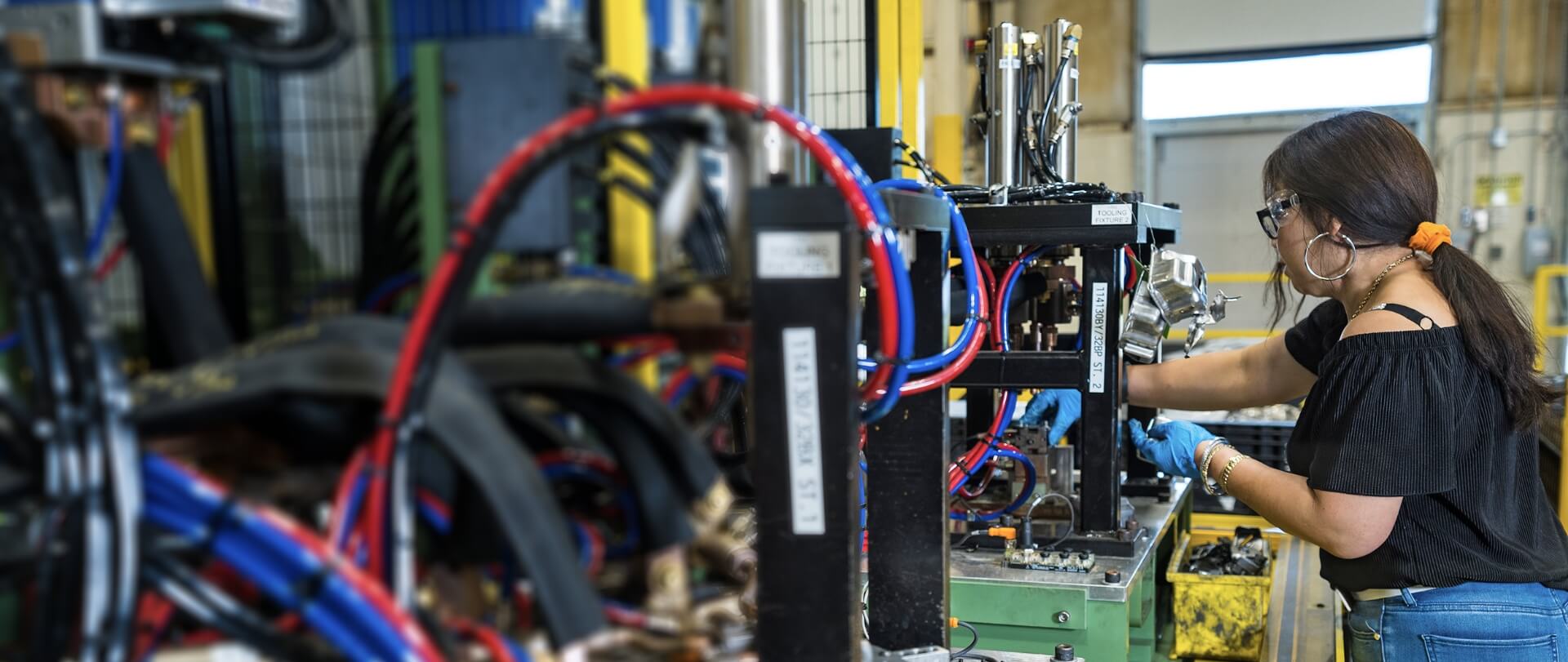
In house welding capabilities to add value to your stamping projects before they leave our facility.
Integrating multiple manufacturing disciplines under one roof enhances efficiency, reduces costs, and improves overall quality. Our in-house welding capabilities eliminate an extra step in the assembly process, streamlining production while providing greater control and insight into every stage of manufacturing.
By combining stamping and welding in-house, our engineers can optimize both processes, making informed recommendations that improve design and manufacturability. This eliminates the need for a secondary supplier, ensuring a seamless transition from stamping to assembly while maintaining full visibility and quality control over the entire production process.
High Repeatability

Engineering Support

Robotic Automation

Process Coordination

Quality Assurance
High Volume
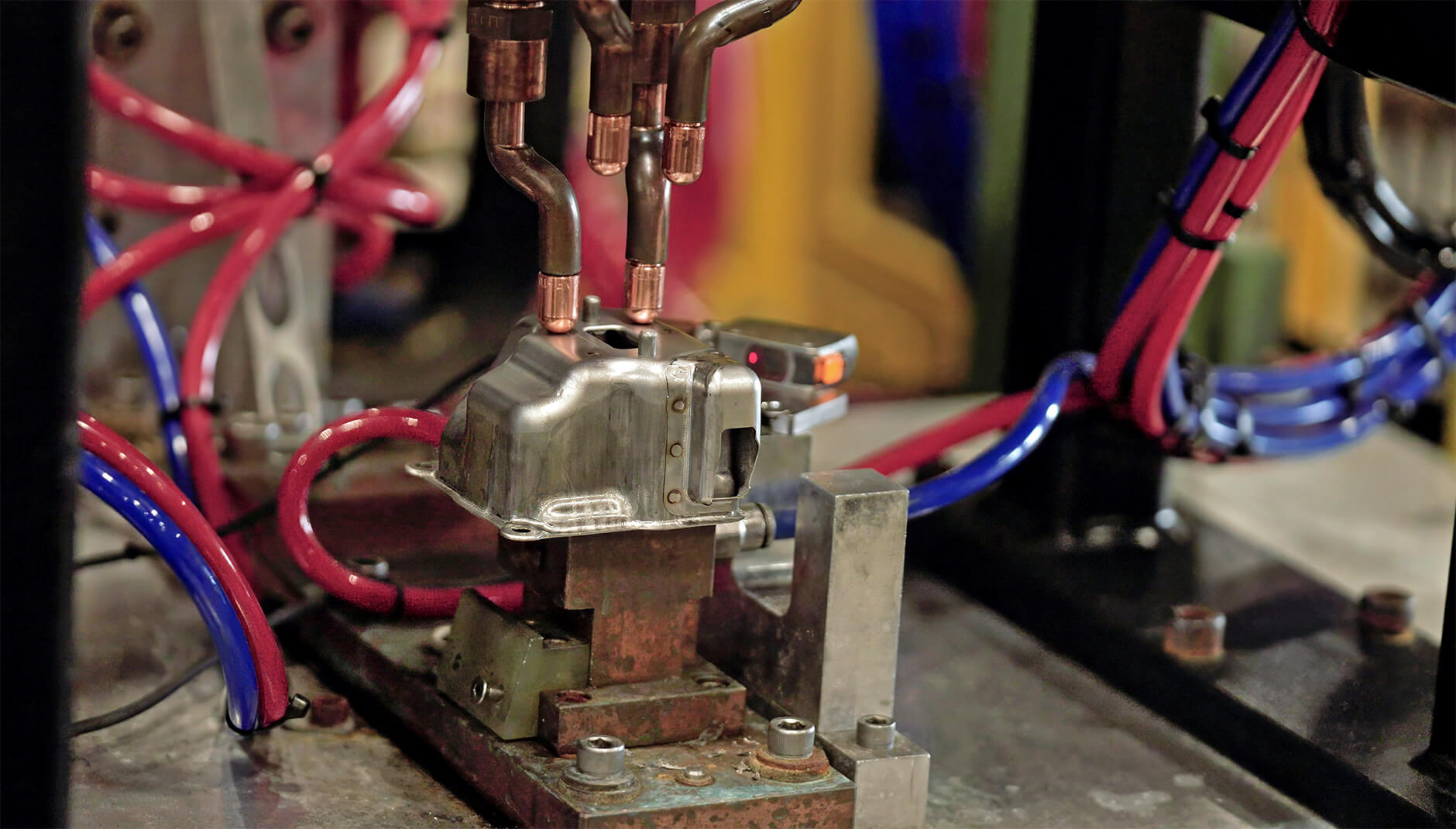
Multi-Gun Spot Welding
Spot welding is a resistance welding process that joins overlapping materials by applying electrical current and pressure through two electrodes. This method ensures strong, consistent welds with minimal heat distortion.
Our advanced multi-gun welding techniques enable us to efficiently weld assemblies at multiple points, delivering high repeatability from part to part while maintaining cost-effectiveness and production efficiency.
Capabilities
- Designed for up to eight spot welds per station.
- Supports a wide range of steel types.
- Utilizes a modular tooling approach for enhanced flexibility.
Advantages
- Lower cost per weld compared to manual or robotic welding processes.
- Consistently precise and repeatable weld locations for high-quality production.
- Modular tooling approach minimizes setup up time, maximizing productivity.
- Cost-effective solution for both high-volume production and low-volume projects.

Robotic Spot Welding
For challenging materials and complex weld locations, robotic spot welding provides a highly flexible alternative to manual and multi-gun welding techniques. These advanced robotic cells offer nearly unlimited flexibility in weld placement and quantity, requiring minimal tooling investment—all while maintaining the high level of locational repeatability found in fixed multi-gun spot welding cells, ensuring precision and consistency in every weld.
Capabilities
- Accommodates an unlimited number of spot welds per part.
- Compatible with a wide range of steel types for diverse applications.
Advantages
- Ideal for welding challenging materials such as galvanized and aluminized steel.
- Ensures highly repeatable weld locations for consistent quality.
- Offers exceptional flexibility to modify weld locations for future design changes.
- Requires a lower initial tooling investment compared to multi-gun welding setup

Projection Welding
Projection welding is a precision resistance welding process that joins metal parts by concentrating electrical current through raised sections, or projections, on one of the workpieces. These strategically designed projections ensure controlled heat generation, resulting in strong, consistent welds with minimal distortion.
This process is highly efficient for high-volume applications where multiple welds are required on the same or similar planes, making it an ideal solution for fastener welding, sheet metal assembly, and structural components.
Capabilities
- Performs multiple welds per cycle, increasing efficiency and throughput.
- Delivers a high production rate, ideal for large-scale manufacturing.
Advantages
- Reduced electrode maintenance compared to spot welding, extending tool life.
- Compatible with various material thicknesses, offering greater application flexibility.
- Fixed weld locations within stamping tooling ensure precise and repeatable weld placement.
- Lower tooling investment compared to alternative welding methods, making it a cost-effective solution.
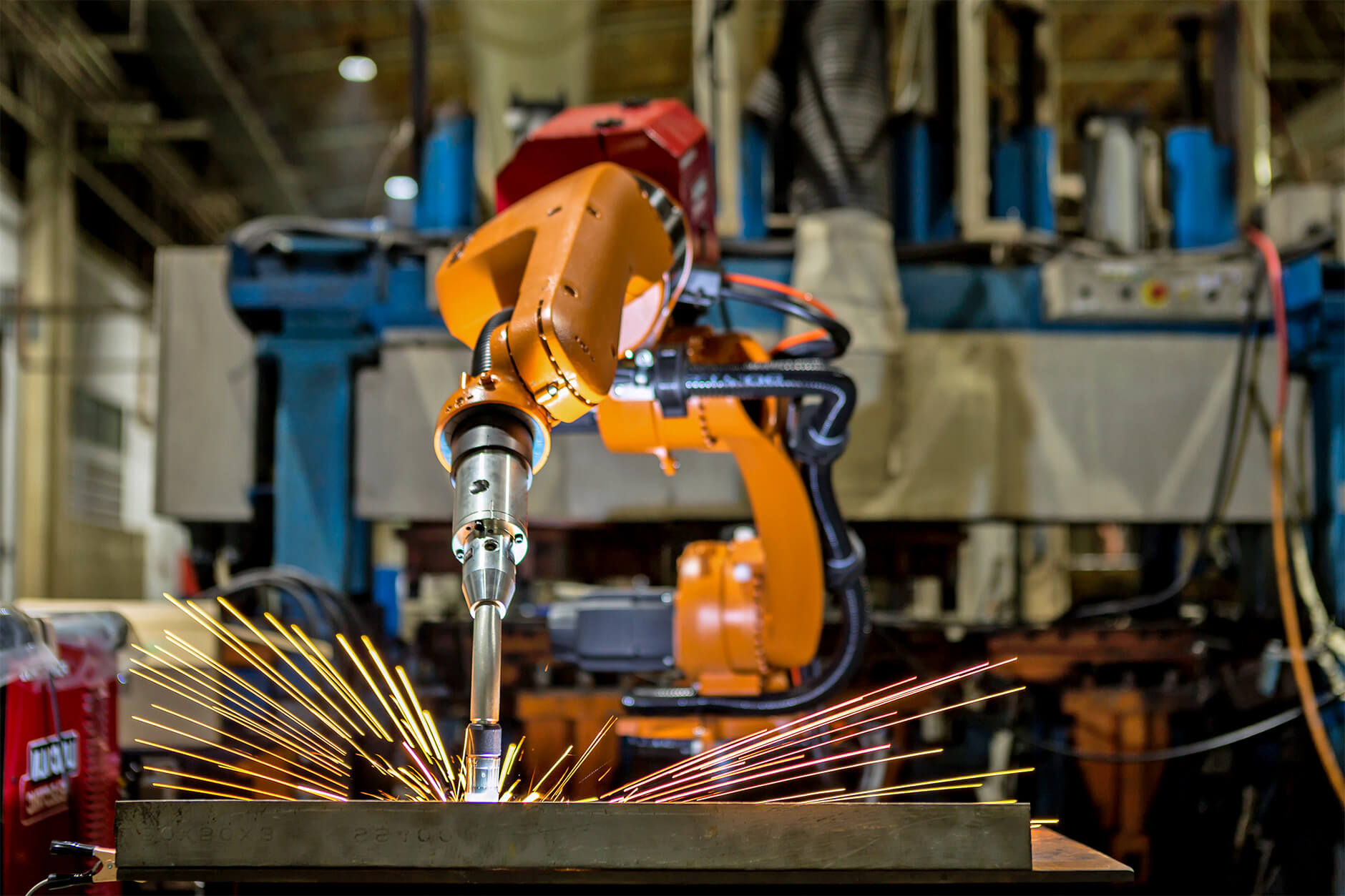
MIG Welding
A MIG (metal inert gas) welder uses a filler wire that is continuously fed through the welding torch to create a strong structural joint for metals of various types and thicknesses. An inert gas is fed into the weld pool to protect the metals from atmospheric contamination. Fast and flexible, it offers a cost-effective solution for weld scenarios where resistance welding is not the appropriate choice.
Capabilities
- Multi-axis capability allows for precise welding in complex geometries.
- Joins dissimilar metals with strong, reliable welds.
- High welding speeds improve efficiency and production throughput.
Advantages
- Easily integrates non-stamped components such as tubes, pipes, and brackets into assemblies.
- Provides continuous weld seams, ideal for applications requiring superior strength or airtight sealing.
- Robotic MIG welding ensures high repeatability, consistent quality, and reduced labor costs.
Choose Variety for your complete stamping and welding solution.
Why juggle multiple suppliers when we can handle your stamping and welding needs under one roof? Our in-house capabilities streamline your supply chain, reduce transportation costs, and accelerate production turnaround—ensuring efficiency, quality, and reliability at every stage.
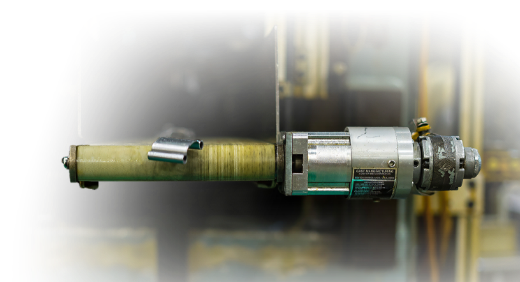
Your schedule may change, but our on-time delivery rate doesn’t.
Our efficient changeover management practices allow us flexibility in responding to customer needs, while our longstanding supplier relationships ensure a steady supply of raw materials.
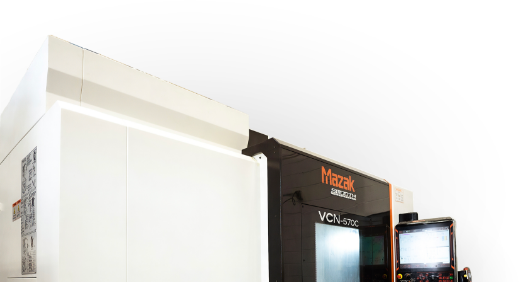
We don’t just manufacture the components—we’ll deliver the complete part.
From automated assemblies to advanced robotics to a dedicated manual assembly department, we bring multiple production steps under one roof.
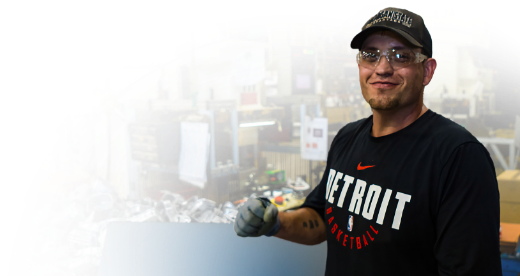
Consolidate your manufacturing needs through our partner network.
The relationships we’ve developed over the decades allow us to be the single point of contact for our customers while providing access to a range of secondary processing services.